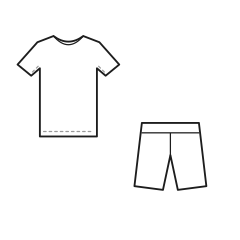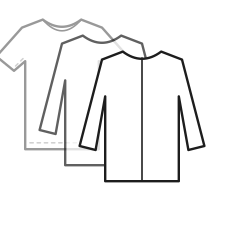
Children move between very different temperatures in a single day: a heated home, a cold walk, a warm classroom, a windy playground. Layering lets them adjust without a full change of clothes. This guide explains what each layer does, how to judge how many a child needs, and the one place where a thick coat should come off.
The three layers and what each one does
Layering works because air trapped between garments insulates better than a single thick piece, and because each layer can be removed on its own. Each layer has a distinct job.
Base layer
The layer against the skin: a tee, a long-sleeve top or, in real cold, thermal leggings and a thermal top. Its job is comfort and moisture management. Cotton is soft and familiar, and fine for most everyday wear. For long, active days outdoors in cold weather, a fine merino wool or a synthetic base layer handles sweat better, because cotton holds moisture and feels cold once damp. Children who are particular about texture may need to try a few fabrics; our guide to soft fabrics for kids compares how different fibres feel.
Mid layer
The insulation: a sweatshirt, a fleece, a knitted jumper or a light padded vest. This is the layer most often added and removed during the day, so it should be easy to take off. A zip-through is quicker than a pullover, and a vest keeps the core warm while leaving arms free.
Outer layer
Protection from wind and rain. In mild weather it can be a thin water-resistant shell over a mid layer. In cold weather it is an insulated coat. The outer layer should be roomy enough to go over the mid layer without straining at the shoulders or shortening the sleeves.
Home, school and outdoors
The difficulty with dressing children for the day is that the morning temperature at the front door says little about conditions at noon. A practical approach is to dress for the warmest indoor setting and add removable layers for everything else.
- Indoors at school. Classrooms are often warm. A base layer and a light mid layer is usually enough; anything heavier ends up shoved in a bag or lost.
- Getting there. Add the outer layer, plus hat and gloves when it is cold. These come off on arrival.
- Break time and outdoor play. The outer layer goes back on. Running children warm up quickly, so a coat may come off again mid-game; a waterproof shell is easier to tie round a waist than a bulky coat.
- Home. Back to the base layer and perhaps a sweatshirt. Children rarely need the extra layers adults reach for when sitting still.
The aim is a set of pieces a child can manage alone. If layers are complicated to take off, children often leave them on and overheat, or take them off and forget them. For the core pieces that make this work, see our list of everyday wardrobe essentials.
Avoiding overheating
It is easy to overdress children, especially younger ones, out of worry that they will be cold. Active children generate a lot of heat, and too many layers lead to sweat, which then chills them when they stop moving.
Signs a child is too warm:
- A hot, damp neck or back when you slip a hand inside the collar.
- Flushed cheeks indoors, or irritability that eases once a layer comes off.
- Sweaty hair at the back of the head after only light activity.
Feeling the back of the neck or the chest gives a better sense of overall warmth than feeling hands and feet, which are often cool even when the child is comfortable. A common rule of thumb is to dress a child in roughly what you would wear for the same activity, then adjust. For a quiet walk they may need the same as you; for running around a playground they often need less.
Puffy coats and car seats
This is the one place where layering advice becomes a safety matter. Thick, puffy coats and snowsuits compress in a crash. A harness that seems snug over a padded coat can end up loose once the padding flattens, which means it may not hold the child as intended.
The widely given advice is to remove bulky coats before buckling a child into a car seat, and to always follow the car seat manufacturer's guidance on clothing and harness fit. Practical ways to keep children warm in the car without a thick coat:
- Dress them in thinner warm layers, such as a base layer and a fleece, which compress very little.
- Warm up the car before the journey where that is practical.
- Buckle the harness first, check it is snug against the child's body, then lay the coat or a blanket over the top of the fastened harness.
- Put the coat back on when you arrive.
Booster seats used with an adult seat belt follow the same logic: the belt should sit flat against the body, not across a deep layer of padding. When in doubt, the manual that came with the seat is the authority.
Hats, gloves and the small things
Accessories do a surprising amount of work. A hat makes a noticeable difference to comfort on a cold morning, and children often tolerate taking a hat on and off more readily than a whole layer. Choose soft, close-fitting hats that do not slip over the eyes; ear flaps or a snug band help on windy days.
For gloves, younger children usually find mittens easier to put on and they keep fingers warmer together. Older children often want gloves for grip on play equipment. Either way, a cord or clip that attaches them to a coat sleeve saves a lot of replacements. A neck tube is easier and safer for active play than a long scarf with loose ends.
Socks matter too. Thicker socks in winter boots are useful, but only if there is room in the boot; squeezing a foot into a tight boot reduces circulation and leaves toes colder, not warmer.
Quick decision table
Use this as a starting point and adjust for wind, rain, activity level and the individual child. Temperatures are approximate and refer to how it feels outside.
| Conditions | Base | Mid | Outer | Extras |
|---|---|---|---|---|
| Warm (above about 20 °C / 68 °F) | Tee | None | None, or a thin shell if rain is likely | Sun hat |
| Mild (about 14–20 °C / 57–68 °F) | Tee or long sleeve | Light sweatshirt, packed | Light jacket if windy or wet | None |
| Cool (about 7–14 °C / 45–57 °F) | Long sleeve | Sweatshirt or fleece | Water-resistant jacket | Light hat |
| Cold (about 0–7 °C / 32–45 °F) | Long sleeve or thermal | Fleece or knit | Insulated coat | Hat, gloves, warm socks |
| Freezing (below about 0 °C / 32 °F) | Thermal top and leggings | Fleece | Insulated, windproof coat | Hat, mittens, neck tube, warm boots |
The same principles apply to adults, though grown-ups tend to need more insulation for the same conditions because they move less. Our journal piece on layering for unpredictable weather covers the adult side, and if the child's layers are fitting tightly over one another, the sizing guide explains how to measure a coat over a sweatshirt.