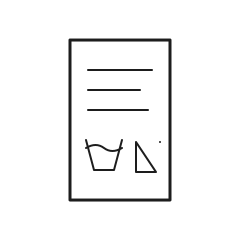
A clothing label packs a lot into a small strip of fabric: what the garment is made of, how to wash it and where it was made. Read properly, it tells you how a piece will feel, how it will age and how much effort it will take to look after.
Fibre content and percentages
The fibre line lists each fibre and its share of the garment, usually by weight, from largest to smallest. A label reading 80% cotton, 20% polyester means four-fifths of the fabric's weight is cotton.
A few things are worth knowing when you read this line:
- Order matters. The first fibre has the strongest influence on how the fabric feels and behaves.
- Small amounts can still matter. A few per cent of elastane changes stretch and recovery noticeably, even though it barely affects the feel.
- Separate parts may be listed separately. Labels often give different contents for the body, lining, rib trims or pocket bags. A sweatshirt might be all cotton in the body and include elastane in the cuffs.
- Generic names are used. Labels typically use fibre names such as polyester, viscose or elastane rather than trade names, though rules on naming vary by country.
What blends are for
Blending is a deliberate trade-off. Each fibre brings strengths, and mixing them aims to keep the best of both.
| Common blend | What it adds | What you give up |
|---|---|---|
| Cotton with polyester | Shape retention, less shrinkage, faster drying | Some breathability; pills may cling rather than shed |
| Cotton with elastane | Stretch and recovery, closer fit | Elastane can degrade with high heat over time |
| Wool with nylon or polyamide | Strength and abrasion resistance, useful in socks and knits | Slightly less natural feel |
| Viscose with elastane | Fluid drape plus stretch | Viscose can weaken when wet; gentle washing needed |
| Linen with cotton | Softer hand, slightly less creasing than pure linen | Less of linen's crisp texture |
A blend is not a sign of lower quality by itself. A well-made cotton-elastane knit can outlast a poorly made all-cotton one. What the percentages give you is a prediction of behaviour, which is particularly useful when comparing sweatshirt fabrics and blends side by side.
Care symbols, explained in words
Most care labels use five basic shapes. Each shape covers one type of treatment, and marks added to it adjust the instruction. A cross through any symbol means do not.
| Symbol | What it covers | Common variations |
|---|---|---|
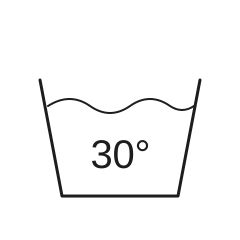
| Washtub | Washing | A number or dots inside show the maximum water temperature; more dots mean hotter. A hand in the tub means hand wash only. One bar beneath means a gentler cycle; two bars mean a very gentle, delicate cycle. |
| Triangle | Bleaching | An empty triangle means any bleach can be used. A triangle with two diagonal lines means only non-chlorine bleach. A crossed triangle means no bleach. |
| Square | Drying | A circle inside the square means tumble drying, with dots for heat level. Depending on the system, a curved line at the top or a single vertical line means line dry; several vertical lines mean drip dry and a horizontal line means dry flat. A diagonal line in the corner means dry in the shade. |
| Iron | Ironing | One dot means low heat, two dots medium, three dots high. Crossed lines beneath the iron mean no steam. |
| Circle | Professional cleaning | A letter inside tells the cleaner which process or solvent to use, and a W refers to professional wet cleaning. Bars beneath indicate a gentler process. A crossed circle means do not dry clean. |
Symbol systems differ slightly between regions, so if a label is unclear, follow the most cautious reading. The instruction is a maximum, not a requirement: a garment labelled for a 40°C wash will usually be fine at 30°C, and often better for it. Our guide to washing cotton so it keeps its size explains why lower temperatures help.
Country of origin
The origin line, such as "Made in" followed by a country, generally refers to where the garment was made, which in clothing often means where it was cut and sewn. It does not necessarily tell you where the fibre was grown, spun into yarn, or woven or knitted into fabric. A single garment can involve several countries before it reaches the final sewing stage.
The exact rules for what counts as the country of origin vary between markets, so labels from different regions may follow slightly different conventions. Some brands add further detail, such as where the fabric was produced, but this is often voluntary. If supply chain details matter to you, look for that extra information rather than inferring it from the origin line.
Finishing terms worth knowing
Labels and product descriptions often include short terms that describe how the yarn or garment was processed. These are the most common.
Pre-shrunk
The fabric or garment has been treated before sale, by washing or mechanical compacting, to remove much of the shrinkage that would otherwise happen in the first washes. It reduces shrinkage but rarely eliminates it entirely, so cool washing and careful drying still help.
Garment dyed
The garment was sewn first and dyed afterwards, rather than being cut from fabric that was already coloured. This often gives a softer, slightly lived-in colour, with subtle variation at the seams where thread and fabric take dye differently. Because the garment has been through a wet process, it may also shrink less later. Colour can fade gradually with washing, which many people see as part of the appeal.
Combed cotton
Combing is an extra step in preparing cotton fibre in which short fibres and impurities are removed, leaving longer, more aligned fibres. The resulting yarn is smoother, stronger and less prone to pilling than carded-only cotton.
Ring-spun cotton
Ring spinning twists fibres into yarn continuously and tightly, producing a finer, softer and generally stronger yarn than faster open-end spinning. Ring-spun jersey usually feels smoother to the touch, which is one reason the term appears often on tees. The difference also affects how a tee drapes and fits, discussed in our guide to tee shoulders, hem and sleeves.
When the label itself is the problem
Labels can be a source of discomfort, especially sewn-in tags at the neck with stiff edges. Printed, tagless labels avoid this, and some garments place the label on a side seam instead. If you remove a tag, cut close to the stitching without cutting into the seam, and keep the information somewhere first. For children who are particularly bothered by tags and seams, our guide to choosing clothes with comfortable seams and tags covers the options in more detail.