Underwear is the layer closest to the skin, and the waistband is the one part of most outfits that grips the body all day. For children who are sensitive to touch, elastic is often the single biggest source of complaints. This guide explains the main elastic and cut options and how to choose waistbands that stay up without digging in.
Exposed, covered and plush-back elastic
Look at the inside of a waistband and you will usually see one of a few constructions.
Exposed elastic
The elastic band is sewn directly onto the fabric and sits in contact with the skin, often with a brand name woven into it. It is common, durable and inexpensive, but the woven surface can feel rough or ridged, and the stitching that attaches it adds texture on the inside.
Covered or enclosed elastic
Here the elastic is sealed inside a channel of the garment's own fabric, so only soft knit touches the skin. Covered bands generally feel smoother. Watch for a seam where the channel is closed, and check that the elastic does not twist inside its casing after washing, which creates a lump.
Plush-back elastic
Plush-back elastic has a brushed, slightly fuzzy face designed to sit against the skin, with the smoother or decorative side facing out. It is softer than standard exposed elastic and often used at leg openings in briefs. Some children find the brushed texture pleasant; a few find it ticklish.
Fold-over waistbands
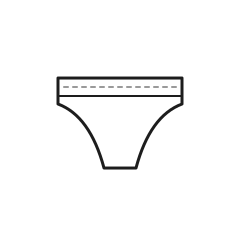
A fold-over band is a strip of soft knit, sometimes with a little stretch added, folded double and sewn to the top of the garment. With no separate elastic, it relies on the fabric's own stretch. These bands are usually wide and gentle, spreading pressure across a larger area, though they can roll down on very active children if the fit is loose.
Boxers, briefs and other cuts
Each cut puts contact and pressure in different places, so the right choice depends on what your child notices.
| Style | How it sits | Possible pluses | Possible minuses |
|---|---|---|---|
| Briefs | Close-fitting, high leg opening | Stays put; no fabric on the thighs | Elastic at both waist and legs |
| Hipster or shorty styles | Lower rise, wider leg | Waistband sits below the belly | May slip on slim children |
| Boxer briefs or trunks | Close-fitting, covers upper thigh | Smooth under trousers; no chafing between thighs | Legs can ride up and bunch |
| Loose boxers | Woven or knit shorts, roomy | Minimal contact and grip | Fabric can twist and bunch under clothes; more seams |
Loose woven boxers often have centre seams and a fly opening, both of which add texture. Knitted boxers or boxer briefs avoid some of that. If your child is unsure, buying a single pair of two or three styles is a low-risk way to compare.
Leg openings and seamless knits
Leg openings are as important as the waistband. Elasticated leg openings hold the fabric in place but can press into the crease of the leg. Bound leg openings use a strip of soft fabric instead, which grips less. On boxer briefs, a leg hem without elastic may ride up during the day, which some children dislike more than a gentle grip.
Seamless underwear is knitted in a tube on a circular machine, so there are no side seams and often no separate waistband. The knit itself changes density to create a firmer band at the waist and legs. Many children with seam sensitivity find seamless pieces comfortable, though the snug, stretchy fit is not to everyone's taste. Inside every pair, check the crotch: most underwear has a gusset, a double layer of fabric sewn in, and its edges can be noticeable. Our page on seam construction and label removal explains what to feel for.
Sizing up or down
When underwear feels tight, sizing up seems the obvious fix, but it has trade-offs. A larger size loosens the waistband, yet leg openings may gape, the fabric may bunch at the crotch, and loose underwear can twist under trousers. Sizing down holds everything firmly but can leave marks and press uncomfortably when sitting.
A better approach is to measure your child's waist and hips and compare them with the size chart for each style, since sizing varies from one maker to another. Our guide to measuring children for clothes walks through it. If one dimension falls between sizes, choose by whichever area your child is most sensitive in: a child who hates waistband pressure may do better in the larger size with a slightly roomier leg.
Toileting and independence
For children who are learning to use the toilet, or who are working towards doing it independently, underwear and trousers need to come down and go back up quickly and without help. Features that make this easier:
- Waistbands with enough stretch to pull down with one hand, but not so loose that they slip.
- A clear front and back, such as a printed label or design at the back, so your child can tell which way round without checking a tag.
- No buttons, snaps or zips on trousers if fastenings are still tricky.
- Fabrics that slide on easily over damp skin after washing hands, rather than sticking.
Practise at home when there is no rush. Being able to manage clothes alone at nursery or school matters to many children, and comfortable, easy clothing removes one obstacle.
Waistband alternatives for trousers
The same principles apply to trousers, shorts and skirts, where the waistband sits on top of the underwear band.
- Pull-on waistbands with a wide, covered elastic are the simplest, with no fastenings at all. Look for flat, soft bands rather than narrow, gathered ones that create a ridge.
- Adjustable buttonhole elastic runs inside the waistband and fastens on buttons at each side. You can tighten it for a slim child or let it out as they grow, so the waistband fits without needing a belt.
- Drawstrings allow fine adjustment, but knots and toggles can press, and long cords can catch. Keep waist drawstrings short and secured, and check local guidance on cords in children's clothing; cords at the hood or neck are a particular safety concern for young children.
- Knit waistbands on jeans and chinos, made from a soft rib that replaces the button and zip, give a smart look with the comfort of a pull-on.
Consider how the two layers interact. Two thick elastic bands stacked on top of each other press harder than either alone, so if trousers have a firm waist, a fold-over or seamless underwear band may be more comfortable underneath. The same thinking applies at bedtime, which the guide to sleepwear for sensitive children covers.
This guide is general information about clothing comfort and fit. It is not medical advice and is not a treatment for any condition. Every child is different. If clothing causes persistent or severe distress, talk to your child’s doctor or an occupational therapist.