A printed tee usually fails at the graphic before it fails at the fabric. The good news is that most print damage comes from heat and friction, both of which you control. Start by working out what kind of print you have, because each method ages in its own way.
The main print methods
You can often identify the method by touch. Run your fingertips across the graphic, then look at it from the inside of the shirt.
Screen print with plastisol ink
Plastisol is a PVC-based ink that sits on top of the fabric and is cured with heat. It feels slightly raised and smooth, sometimes a little rubbery, and colours look bright and opaque even on dark shirts. From the inside, you see little or no colour coming through.
Screen print with water-based ink
Water-based inks soak into the fibres instead of forming a layer on top. The print feels soft, almost like part of the fabric, and the texture of the knit shows through. Colours can look slightly muted, especially on darker garments.
Discharge print
Discharge is a type of water-based printing that removes the shirt's dye in the printed area and replaces it with colour. It works best on cotton dyed in a way that responds to the process, so it is most often seen on all-cotton tees. The result has almost no feel at all and a slightly faded, vintage character from day one.
Direct-to-garment (DTG)
DTG uses a specialised inkjet printer to apply water-based ink directly onto the fabric. It handles photographic detail and many colours well. On dark garments, a pre-treatment and a white underbase are usually applied first. The print feels soft but can sit slightly on the surface.
Heat transfer
Heat transfers are printed or cut onto a carrier, such as vinyl or film, then pressed onto the shirt. They have a defined edge you can feel with a fingernail and a smooth, sometimes glossy surface that sits clearly on top of the fabric.
How each one ages
| Method | Typical feel | How it tends to wear | Main enemy |
|---|---|---|---|
| Plastisol | Raised, smooth | Fine cracking across the surface over time | High heat, direct ironing |
| Water-based | Soft, absorbed | Gradual, even fading | Hot washes, harsh detergents |
| Discharge | Almost none | Softens and fades gently with the fabric | Bleach, sunlight |
| DTG | Soft, slight surface | Fading, sometimes faster in early washes | Heat, abrasion |
| Heat transfer | Defined edge, glossy | Lifting or peeling at edges, cracking | Heat, stretching, friction |
None of these timelines is fixed. Ink quality, curing and the fabric all play a part. But the patterns hold well enough to shape how you care for each type.
Washing: inside out and cool
Turning a printed tee inside out is the single most useful habit. It moves the graphic away from the drum, zips, buttons and other garments, which cuts down on the friction that scuffs, cracks and lifts prints.
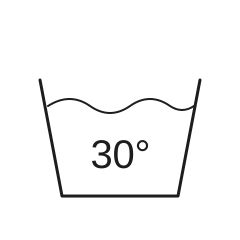
- Use a cold or cool wash. Heat softens plastisol and transfer adhesives and accelerates fading in water-based and DTG prints. Cool water also reduces the shrinkage risk for cotton, which matters because a shrinking shirt puts strain on a print that cannot shrink with it. Our piece on washing cotton without shrinking it goes deeper.
- Choose a gentle cycle and avoid overfilling the machine, so garments are not grinding against each other.
- Wash with similar weights. Heavy denim and towels are abrasive companions for a printed tee.
- Skip bleach, including on white tees with coloured prints. Bleach attacks dyes and inks alike.
- Use a mild detergent in the recommended amount. Excess detergent can leave residue on prints and fabric.
Drying without heat damage
The tumble dryer is where most print damage happens. High heat combined with constant tumbling is hard on every method, and especially on plastisol and transfers, which can soften, stick to themselves or begin to lift.
Line drying or drying flat is the safest choice. Shake the shirt out, smooth it with your hands and hang it from the hem or over a line by the body rather than pegging it by the shoulders, which can leave marks and stretch the neck. Dry it out of strong direct sunlight if colour matters to you, as prolonged sun can fade both fabric and ink.
If you do use a dryer, keep it inside out and on the lowest heat setting, and remove the tee while it is still slightly damp.
Ironing around the print
Never put a hot iron directly on a print. Plastisol and transfers can melt, smear or stick to the iron's plate, and even softer prints can scorch or take on a shine.
- Iron the tee inside out, so the soleplate only touches the back of the printed area.
- Use a low to medium setting suitable for the fabric, and check the care label first.
- For extra protection, place a thin cotton cloth or a sheet of baking parchment between the iron and the fabric.
- A handheld steamer, used from a short distance, smooths creases with less direct contact.
Often the simplest route is to avoid ironing altogether. A tee that is shaken out and dried flat or on a line will usually relax most creases on its own.
Storing printed tees
Folding is generally better than hanging for knitted tees. Hangers can stretch the shoulders and neck over time, which distorts both fit and graphic. If you prefer to hang, use broad, rounded hangers and insert them through the hem rather than stretching the neck opening.
When folding, avoid creasing sharply through the middle of a thick plastisol print over and over. Repeated folds at the same line encourage cracks. Fold so the graphic lies as flat as possible, or roll the tee loosely.
Store tees somewhere cool and dry. Very warm storage can make plastisol prints slightly tacky, and stacking them tightly in heat can cause prints to stick to the fabric above. Keep them out of direct light if they live on open shelves.
When fit and print interact
Prints behave best when the shirt is not under tension. A tee that is tight across the chest stretches the graphic every time you move, which speeds up cracking on plastisol and lifting on transfers. If you buy graphic tees often, it is worth knowing where your ideal shoulder seam and chest ease should land; our guide to getting the fit of a tee right covers that. Fabric weight matters too: a heavier jersey provides a steadier base for a print than a very thin, stretchy one, as explained in our note on fabric weight.
Some ageing is part of the appeal. A gently faded water-based print or a lightly crazed plastisol graphic can look better at year three than on day one. The aim of good care is to make that ageing slow and even, rather than to stop it entirely.